
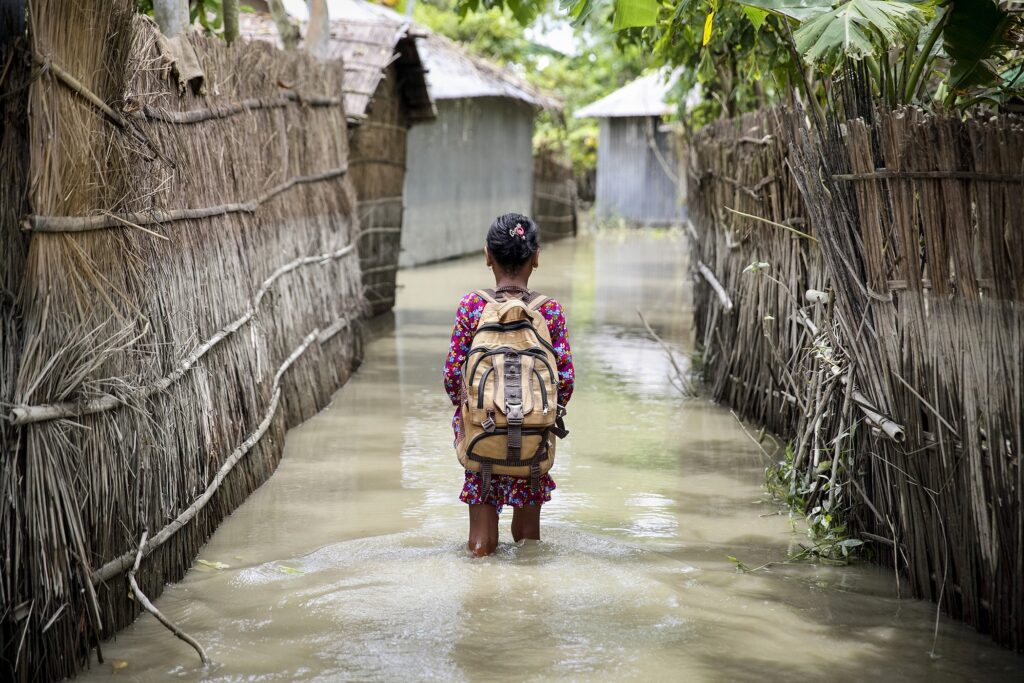
Climate change is not just about rising temperatures, it’s about the lives it disrupts, especially for children. From extreme heatwaves to devastating floods and the spread of diseases, the impacts are profound. Why are children the most affected, and what can we do to protect their future? Let’s explore the answers together.
The last six years have been the hottest on record, with 2020 tying with 2016 as the hottest year. Global temperatures have risen by 1ºC since the 1880s. Over 820 million children are highly exposed to heatwaves, facing greater risks than adults due to slower temperature adjustment and vulnerability to:
- Heat rash, cramps, exhaustion, stroke
- Dehydration, leading to hyperthermia and mortality
- Diarrhoea, worsening fluid loss and heat-related deaths
A. Riverine Flooding
Around 335 million children are highly exposed to riverine flooding. Strong currents and debris put them at risk of injuries and drowning, even in shallow water. Floods often destroy homes, leaving children vulnerable without proper shelter.
Beyond the immediate danger, floods compromise clean water supplies, leading to diarrhoea, dehydration, and malnutrition. Children are especially at risk during flash floods, which strike suddenly and with devastating force, causing mass damage to homes, schools, and health centers.
- Rising sea levels,
- Storm surges, and
- Cyclones linked to increasingly severe weather from climate change.
Higher temperatures contribute to water expansion, worsening coastal erosion and flooding. Low-lying, densely populated areas are especially vulnerable, putting homes, infrastructure, and ecosystems at risk. Children in these regions face significant threats to their safety and future.

C. Disease Vector Exposure
The spread of deadly diseases like malaria and dengue is significantly influenced by climate change:
- Changes in temperature, rainfall, and humidity directly impact mosquito reproduction and survival.
- Warmer temperatures accelerate virus incubation and increase mosquito bite rates.
- Rising temperatures lead to faster mosquito life cycles, increasing disease transmission.
In 2019, malaria caused 229 million cases and over 409,000 deaths, with children under five making up 67% of fatalities.
D. Disease Vector Exposure

The map highlights Indonesia, framed in orange, as a region with extremely high disease vector exposure (yellow areas), emphasizing the severe impact of climate change on health risks like malaria and dengue.
E. Why is exposure to overlapping hazards so worrying?
Overlapping hazards can trigger, reinforce, and magnify each other:
- Severe weather + cyclones + sea level rise = storm surges
- Air pollution + drought = worsened air quality
These combined hazards hinder children’s recovery and resilience. Families facing multiple crises may have limited resources and coping mechanisms. As crises pile up, institutional support can also be exhausted.
Overlapping shocks can exacerbate inequalities, especially for poorer children who lack access to essential resources like clean water and sanitation. Wealthier children, however, may have better access and resilience.
Children are on the frontlines of climate change, facing unparalleled risks from heatwaves, flooding, and disease. Their vulnerability demands urgent action to address these overlapping hazards, which magnify inequalities and jeopardize their health, safety, and future. Protecting children means not only mitigating climate impacts but also fostering resilience, equity, and sustainable solutions to secure a livable world for the generations to come.